This blog will focus on the first part of the AAA Plan. We will look and show examples from each activity type on the list for the Activate stage (pre-assessment).
This is the list of activity types in the activation stage:
- quiz/test
- talk about quote
- survey
- concept formation
- agree/disagree
- journal
- K-W-L
- discussion questions
quiz/test
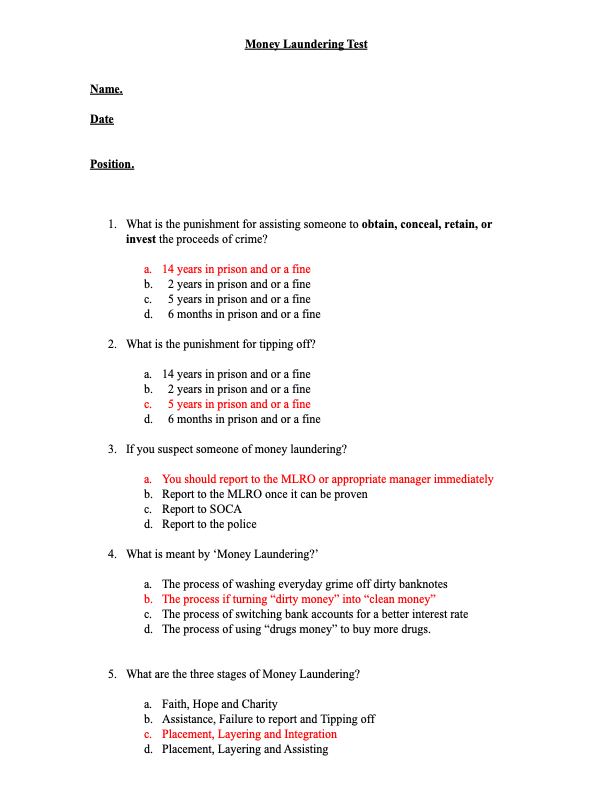
First, is a quiz/test can be very effective if presented correctly. One of my favorite lesson plans is the Money Laundry lesson plan.
I begin by handing out this test which is a continuous education test for bank employees. It is not a graded test so the students have no need to worry.
This test contains 14 questions.
I like this test because it has acronyms, definitions, and the stages of money laundering that will be covered in the lesson plan. It can begin discussions and see how much the students know about money laundering. (With ESL students, you would be surprised what they know!)
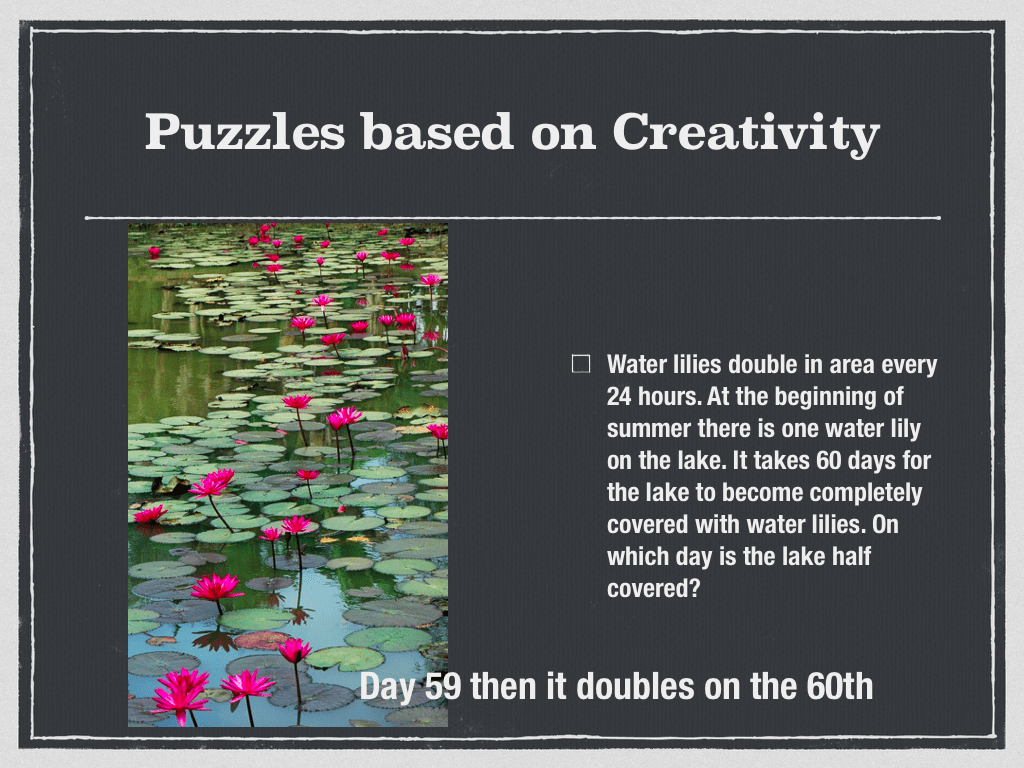
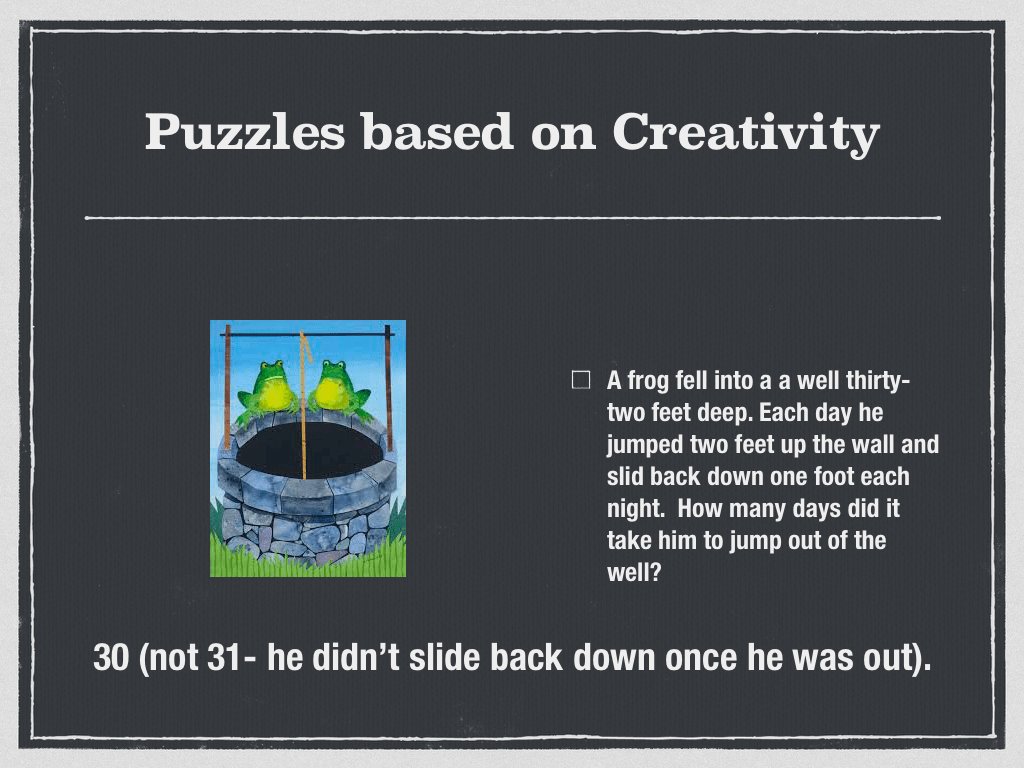
In my Innovation lesson plan, I use word problems to start the lesson, however, these are not just word problems, but word problems that requires more common sense than an arithmetic acumen. From the slides, I posted three word problems and then reveal the answer later at the bottom.
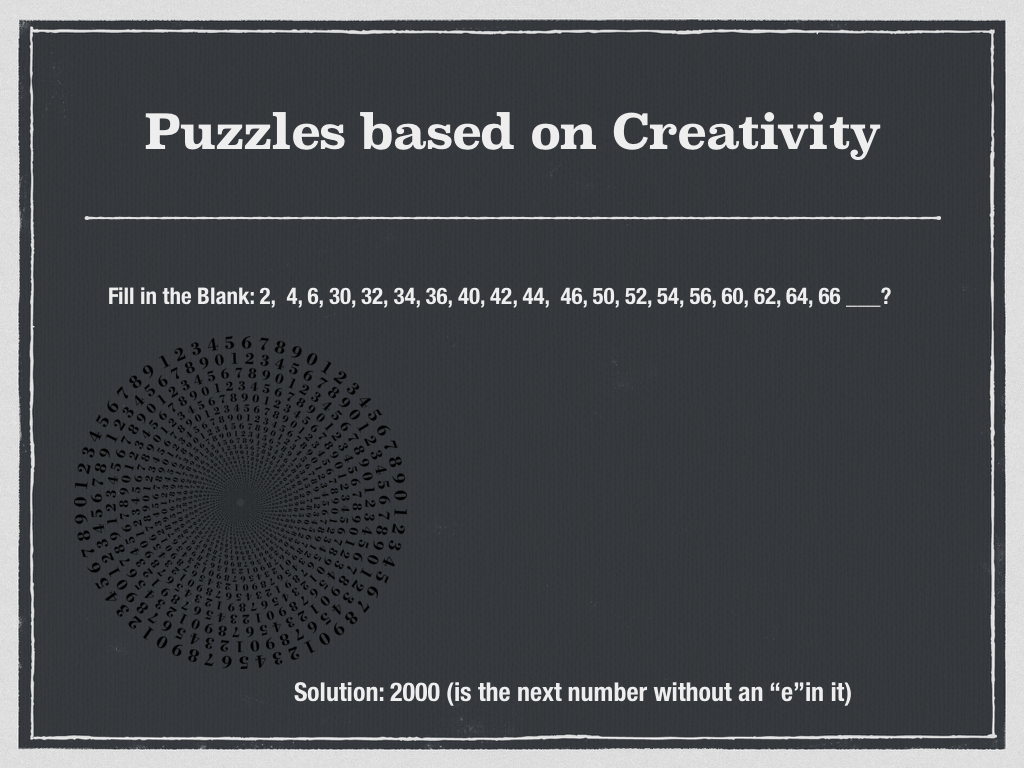
The last one is the most entertaining because no one ever gets the answer and it is the most engaging one. It appears the answer can be found quickly, but it is not. This also has a linguistic element for an ESL class and no math is required. The answer is in the spelling of the numbers rather than finding a numerical pattern.
talk about a quote
Talk about a quote is a very common one. In fact, the book I use for Business English begins each chapter with a one.
The quote can be written on the board or part of the lesson plan slide.
I usually ask two standardized questions with each quote: 1) Do you understand the quote? (Call on students to explain in in their own words.) and 2) Do you agree or disagree with the quote? (Explain your choice. )
Choose a quote that relates to the lesson plan.
Here are some examples:
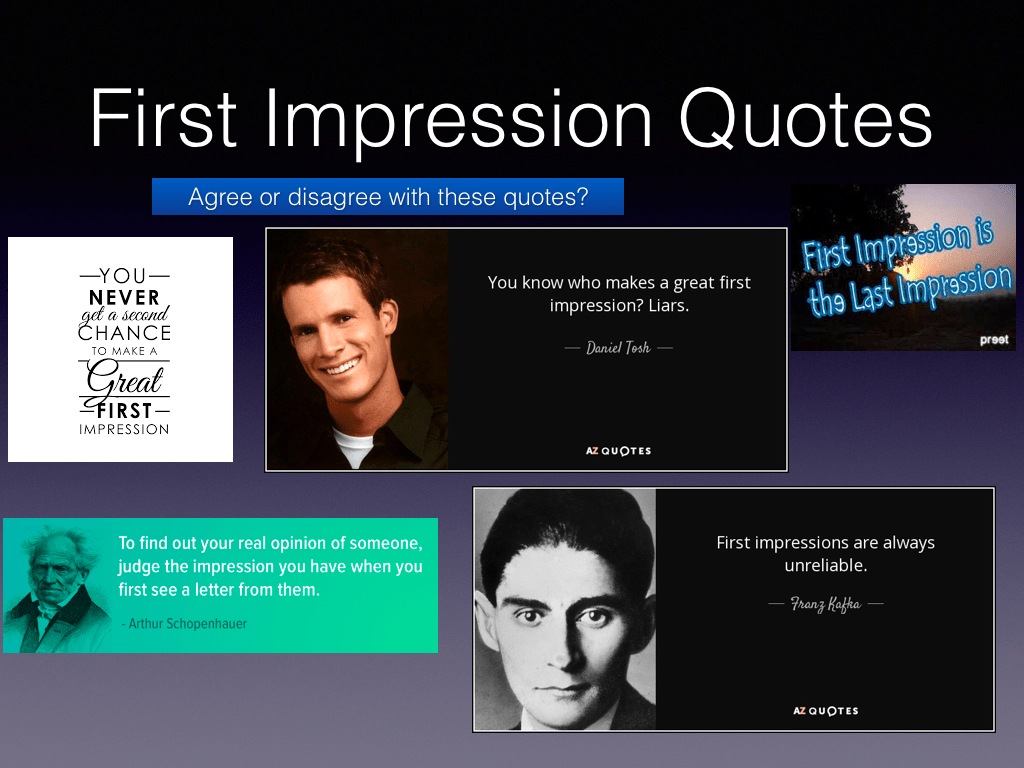
You can borrow from bloom’s taxonomy by implementing one of the six domains; synthesis. Synthesis means to mix things around. In this case, use the quote in several ways by expressing the opposite or paraphrasing it. In my First Impressions lesson plan, I begin with the common quote: “You never get a second chance to make a first impression.” I follow it with several other quotes that express the opposite and/or are similar to the first quote. This is a good opening if the students all agree on the first quotation, then they can’t agree on the opposite quote which directs them to explain why they don’t agree.
This slide was created on keynote from iWorks. I used the animate feature build-in/ appear format. First, I show only one quote, and then I show the others one by one repeating the same question, “Do you agree or disagree?”
Survey
Surveys are a good way to get students to identify with the lesson plan and see how they relate.
Surveys that measure results through quantitative data, I believe, are the best. For example, in the survey below, students would select three from each column. After selecting three each letter would be assigned a value but they do not know what that value is until they have finished their selection.
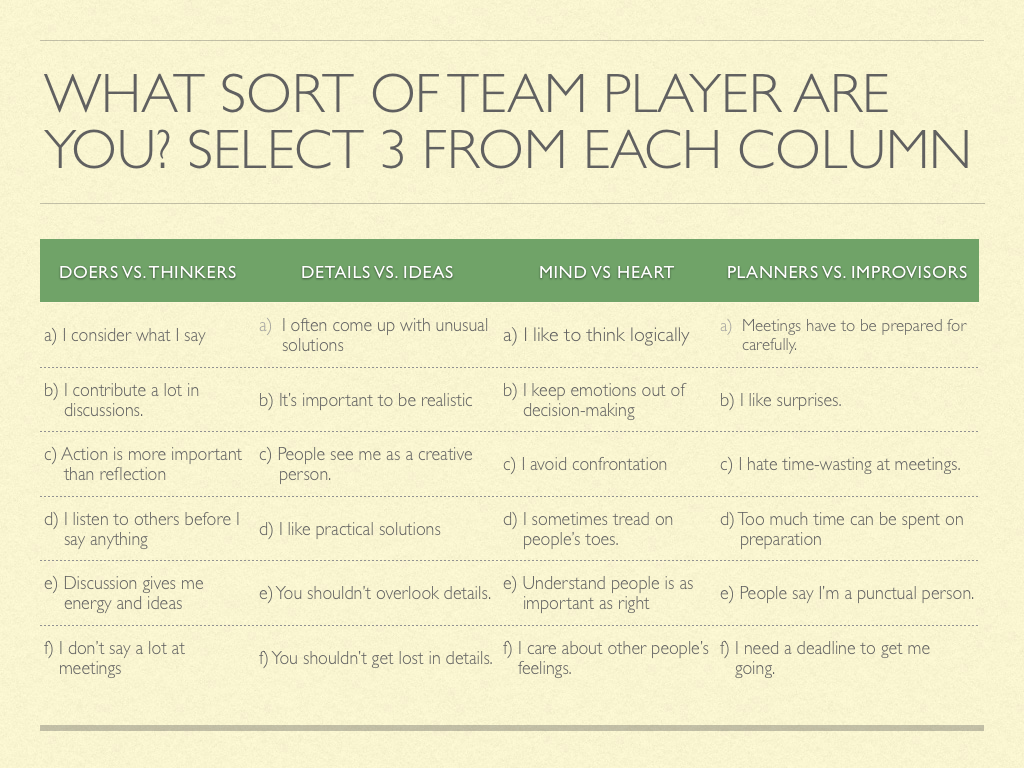
The second slide would show the values of each letter and they would add the total up on their own.
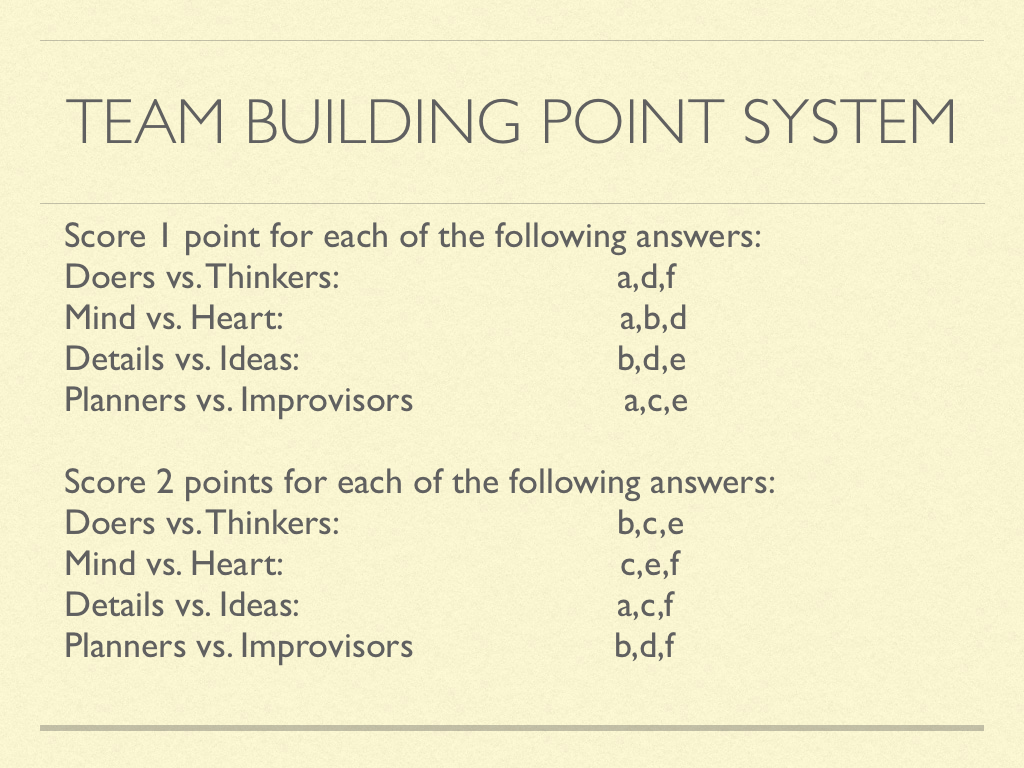
The third slide would define who they are as a team player from the result of the survey.
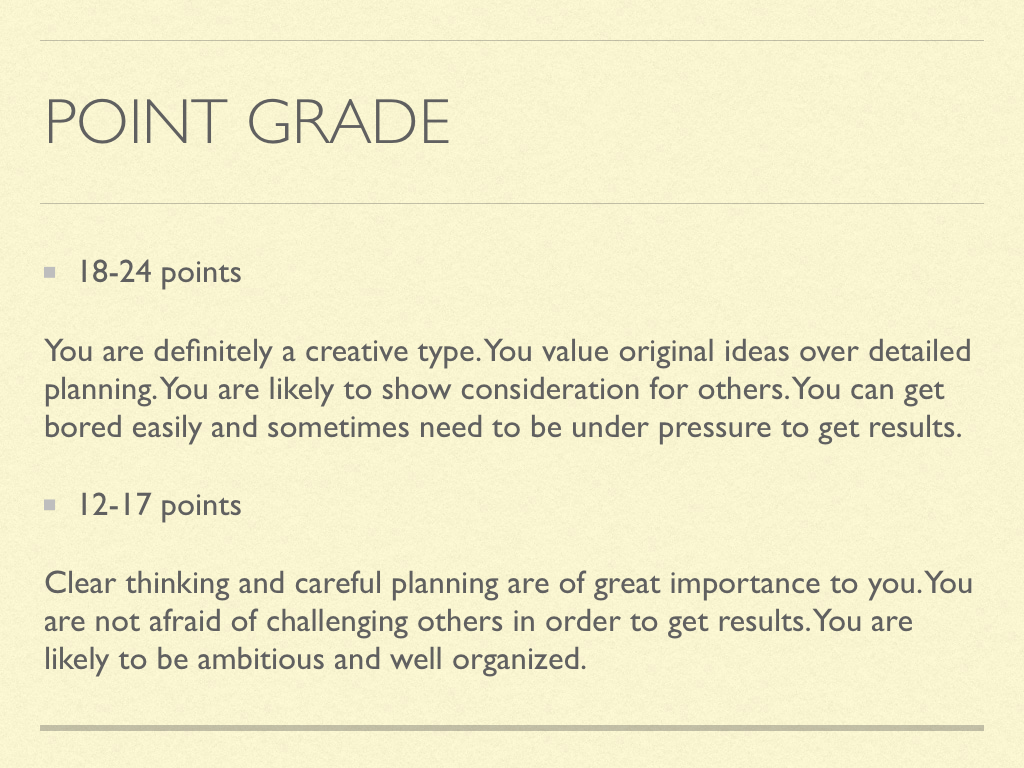
This type of survey makes the learner think about who they are in relation to the lesson plan. It is a great way to begin a lesson plan about team building.
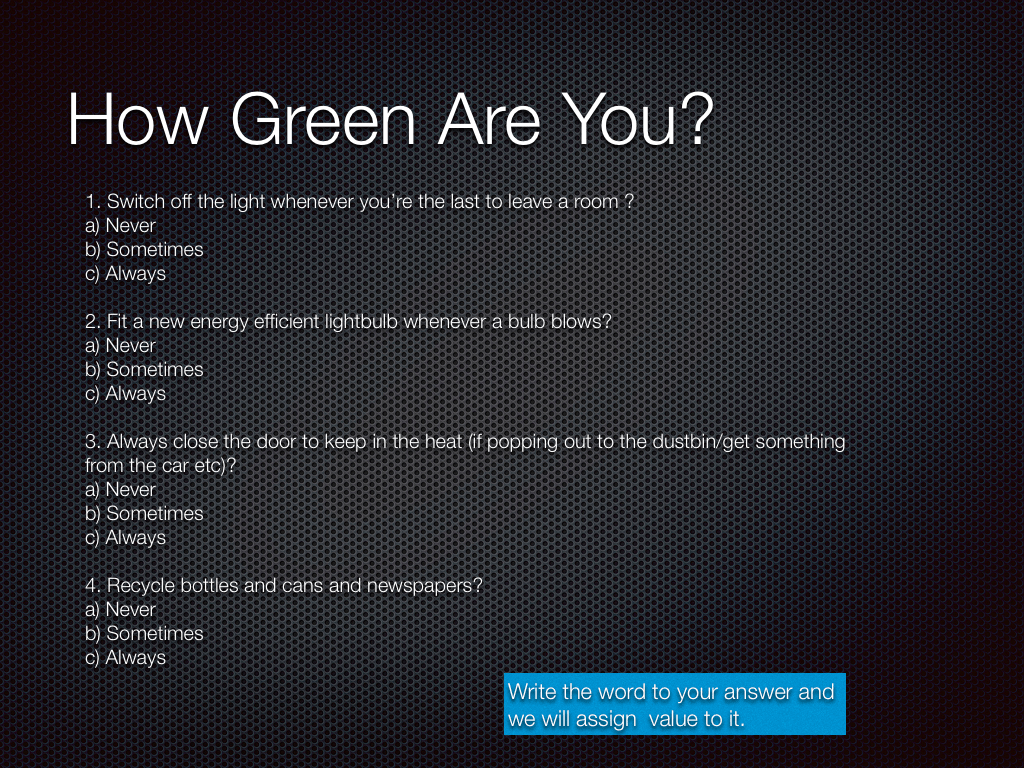
Another one that is interesting concerns the environment. This survey has seventeen questions. The questions are simple and the learners do not need to think too much about the vocabulary.
I inserted a blue box to inform the students that they will need to add up the values later. This is important so students do not just take the test in their head but are writing the answers down. In the past, if I did not tell them, I would have to redo the survey again.
The next slide would illustrate how to tally up the total.
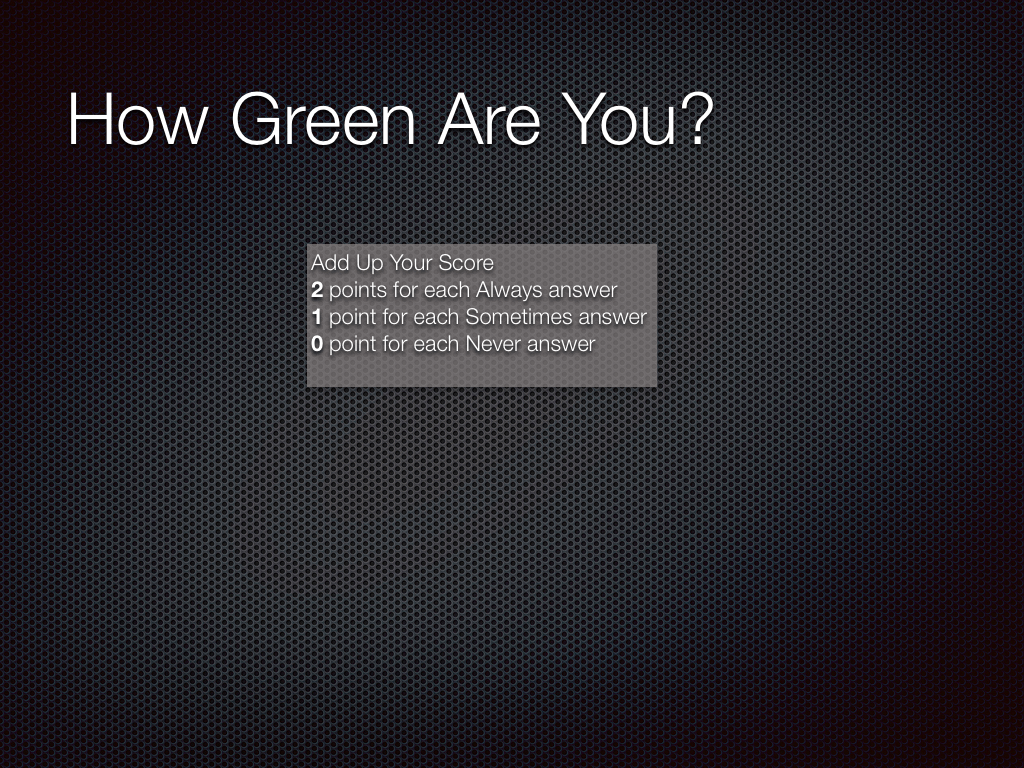
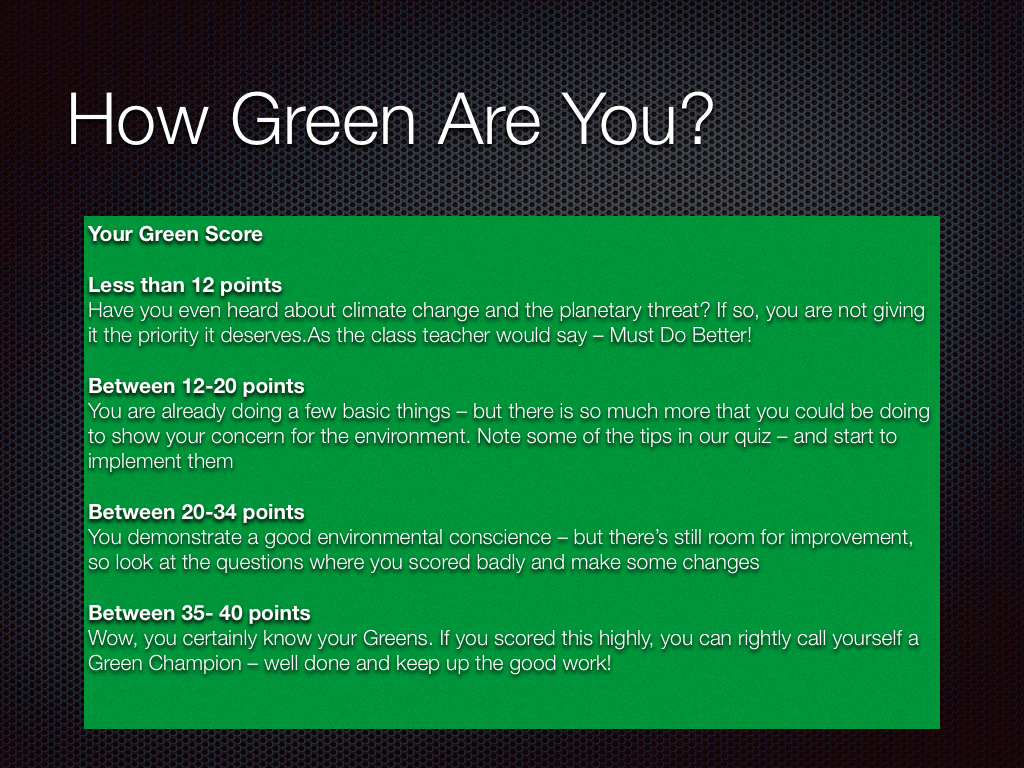
The last slide for the survey would identify where they stand on being green. This lesson plan was not an environmental lesson per se, but a lesson on energy.
Any survey will suffice as long as it is relevant to the lesson plan.
Google is your friend. You can find many brief surveys online to start a lesson plan.
Make sure the survey is not too long. No more than 20 questions should be used when beginning a lesson plan.
The surveys should be simplistic to make a point on what the topic is about.
concept formation
Concept formation allows learners to put lists or priorities in a certain order.
This is a good way to see if the students not only understand the topic you introduce, but have a conceptualization of the material being presented.
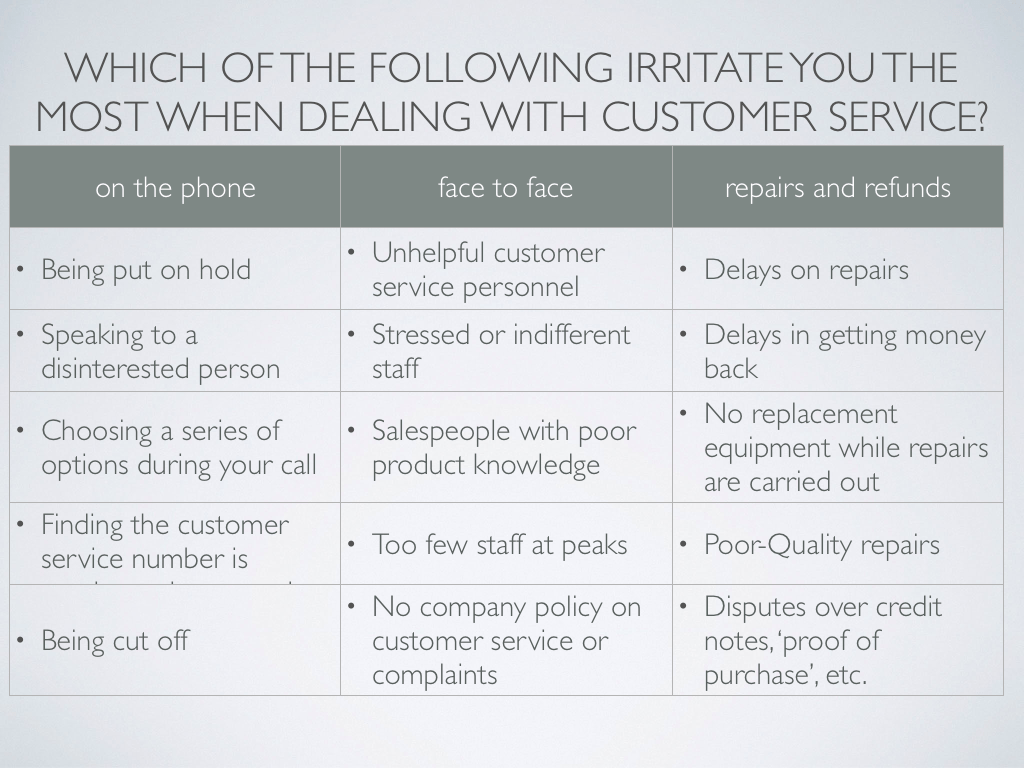
The Customer Service lesson plan has a lot of room for subjection of what is correct and opinions of what is important.
This slide from Market Leader contains three categories of customer service and four irritable situations under those categories.
Depending on the size of the class, I would implement a group decision do have the learners group in pairs and discuss which ones are the most irritating and why.
Then, I would regroup the class and have them share their choices and why those choices were the most irritable.
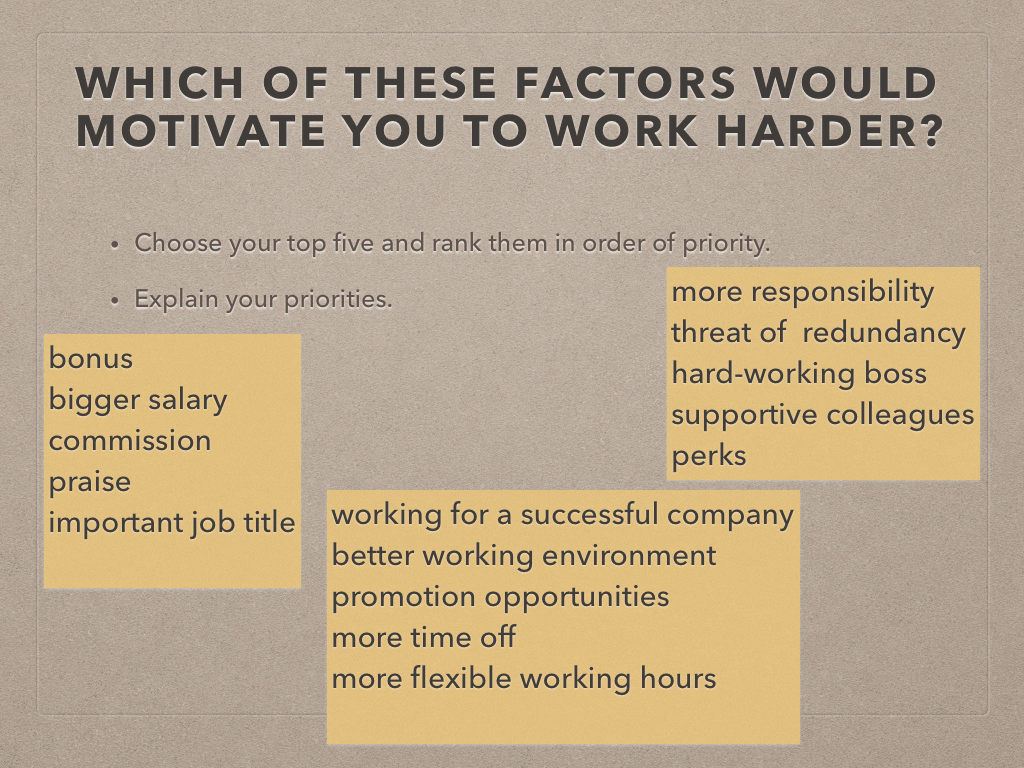
This slide comes from the Job Satisfaction lesson plan. This allows learners to select five factors and then list them in their own order of importance.
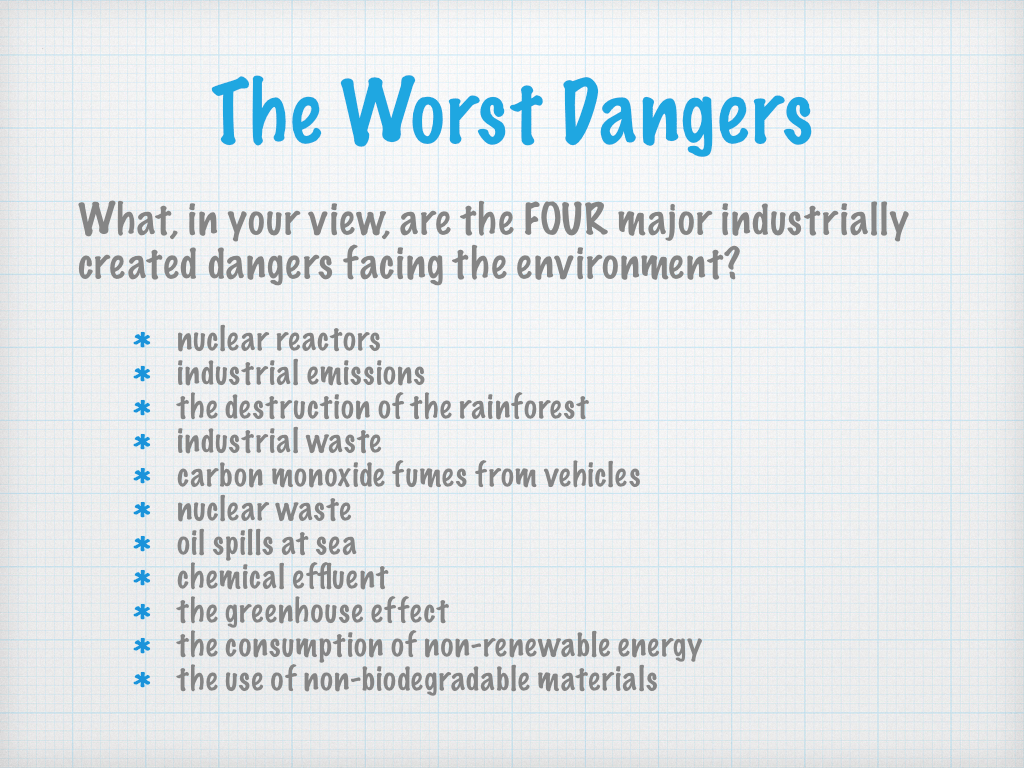
This concept formation keeps it direct and reminds learners it is their opinion.
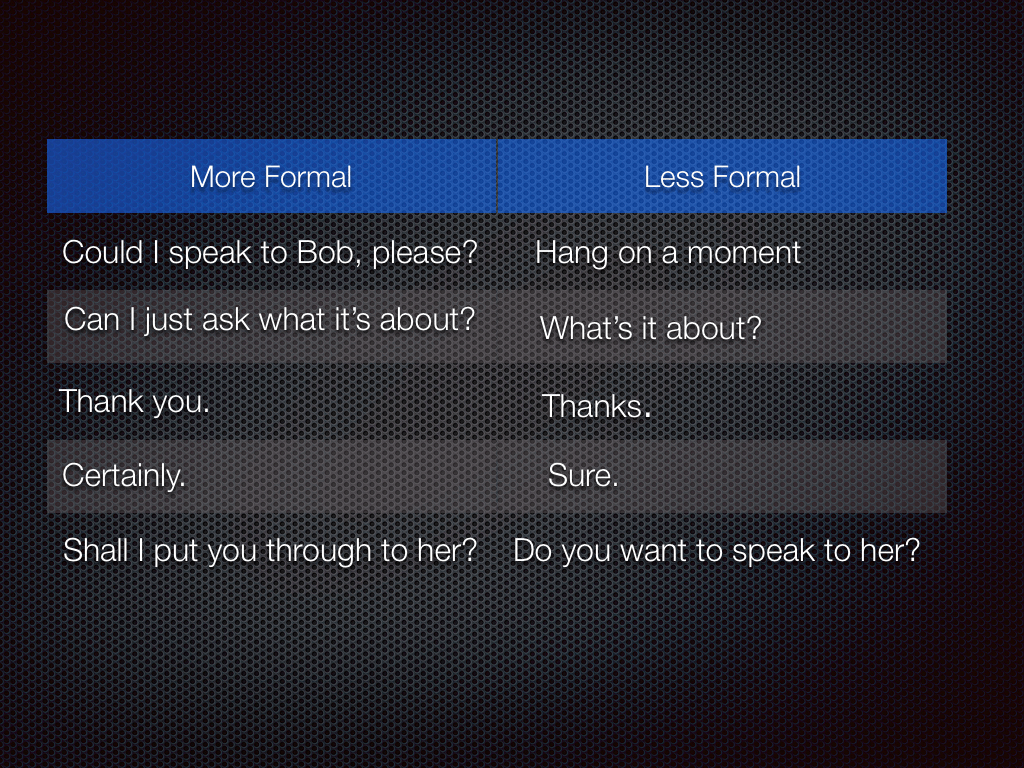
This slide from the Communication lesson plan has a little more objective than subjective content.
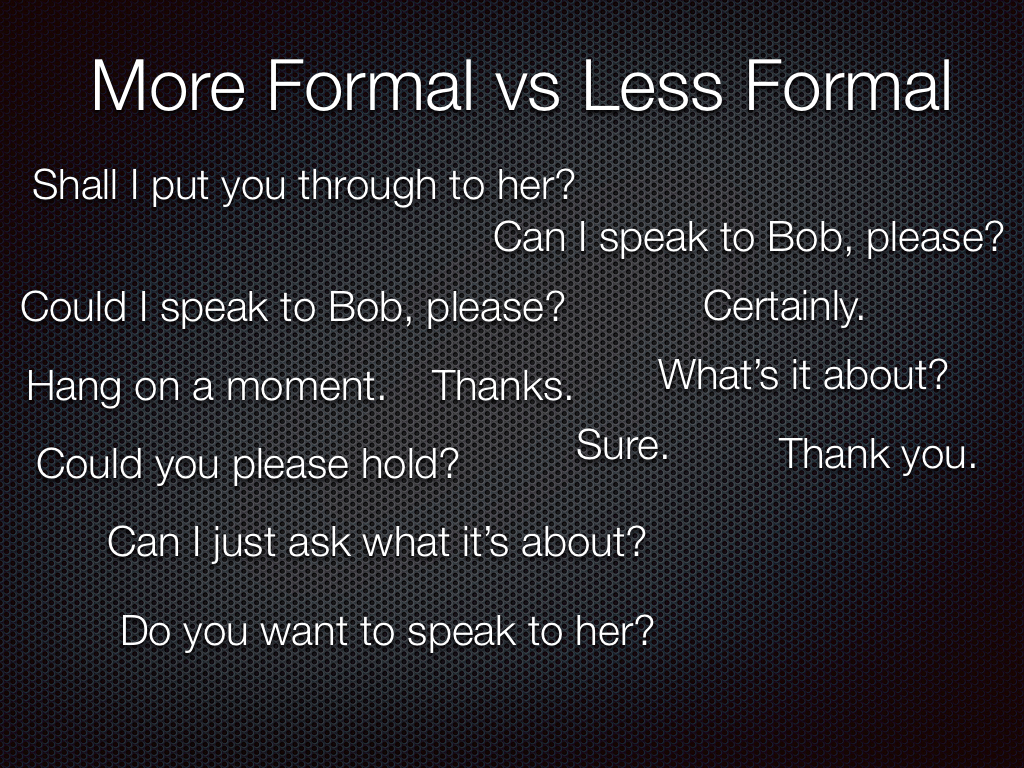
The next slide reveals the correct categorization of the phrases.
agree/disagree
Agree/disagree can be weaved in with the other pre-assessment activity types, however, I categorized as a separate activity type.
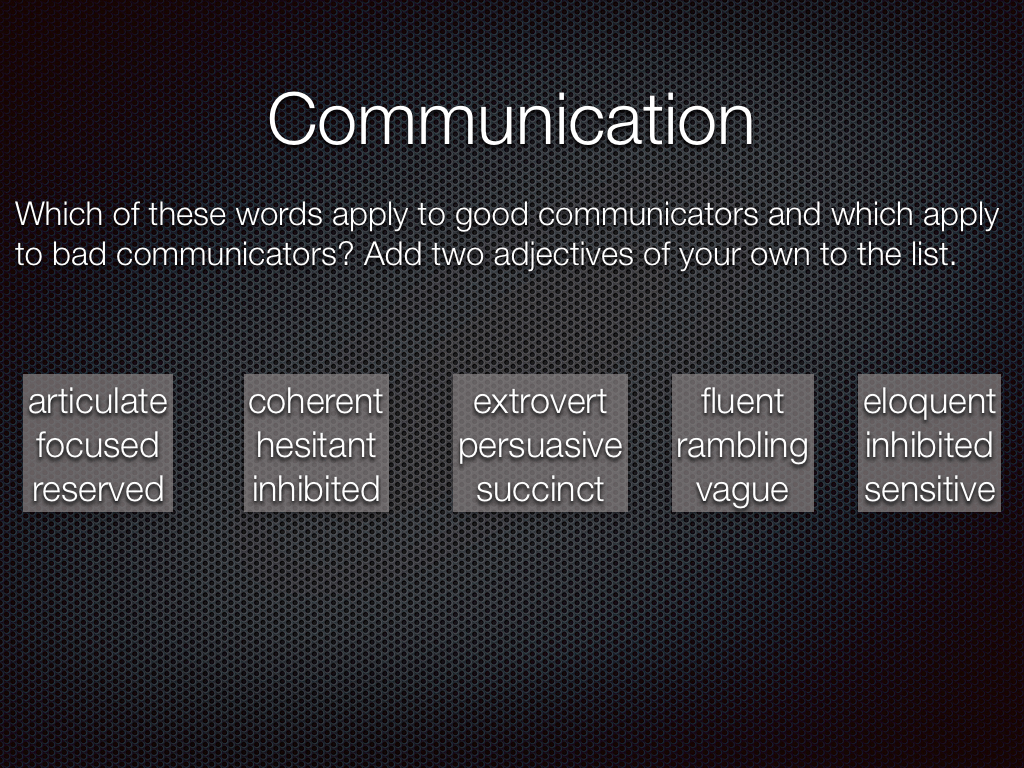
This is best effective with vocabulary terms used in the lesson plan.
Two things can happen in this slide: 1) arranging the correct words in the correct category and 2) finding out what the words actually mean.
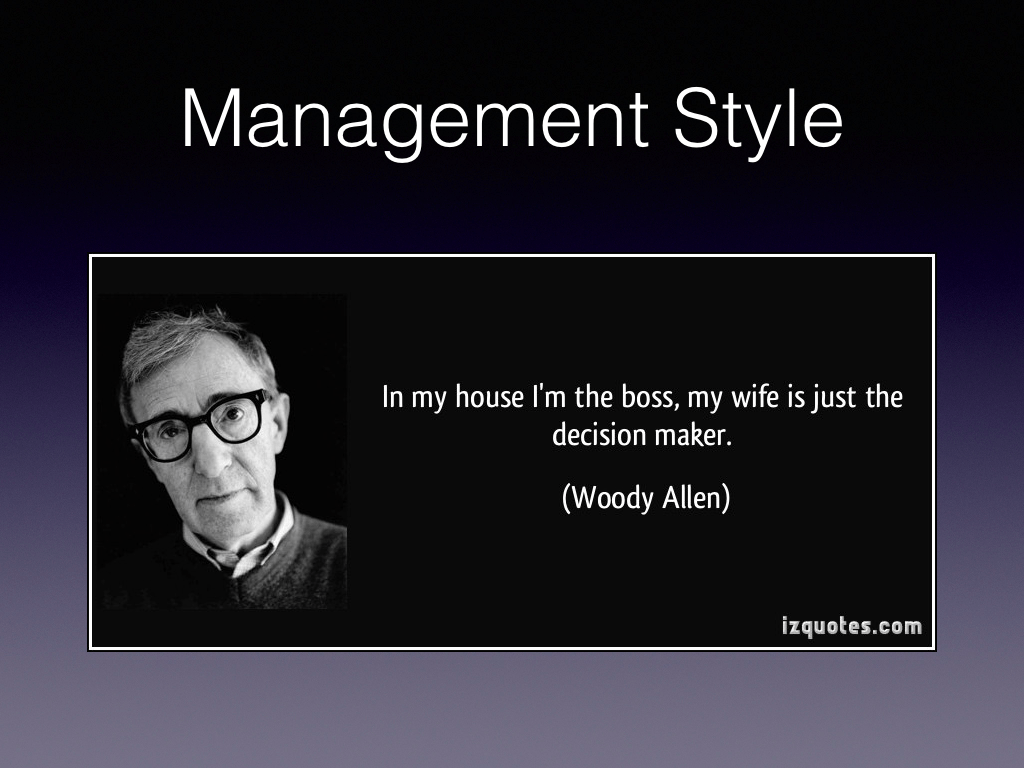
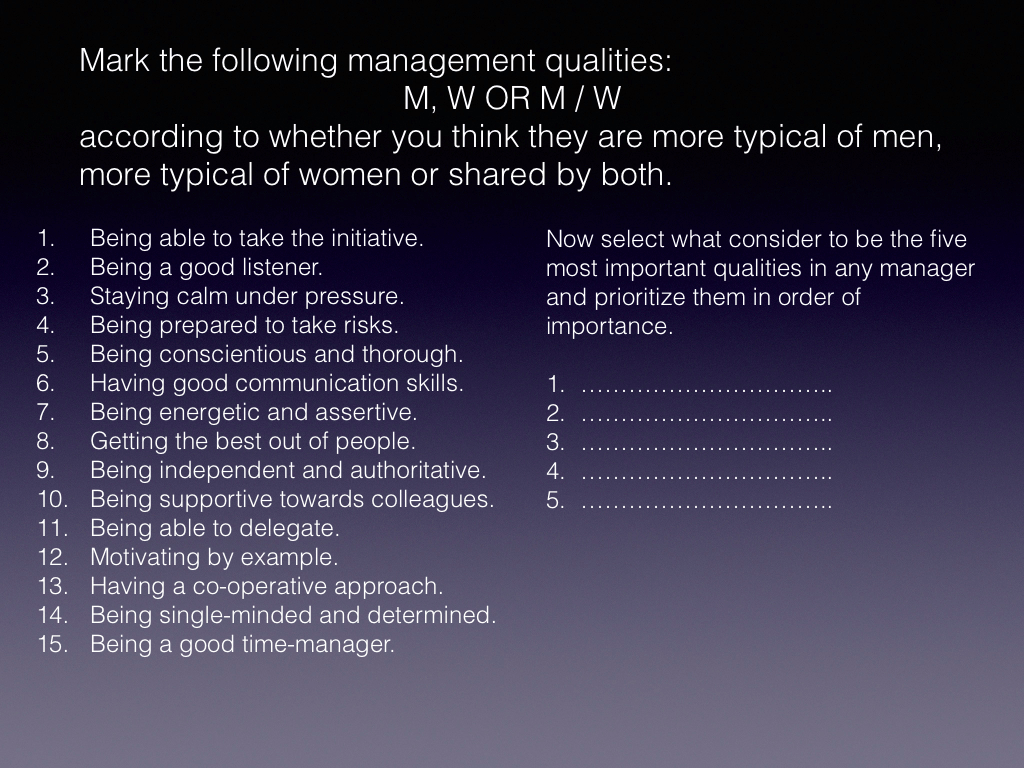
This slide below comes from my Management Styles lesson plan.
You could call this “the battle of the sexes.” I do shut up on this one and only let the students decide.
I had many interesting responses with this one. Interestingly enough, the responses were agreed together with male and female agreement.
You can use sense of humor by telling them that getting the answer correct has a 50/50 chance. (agree or disagree)
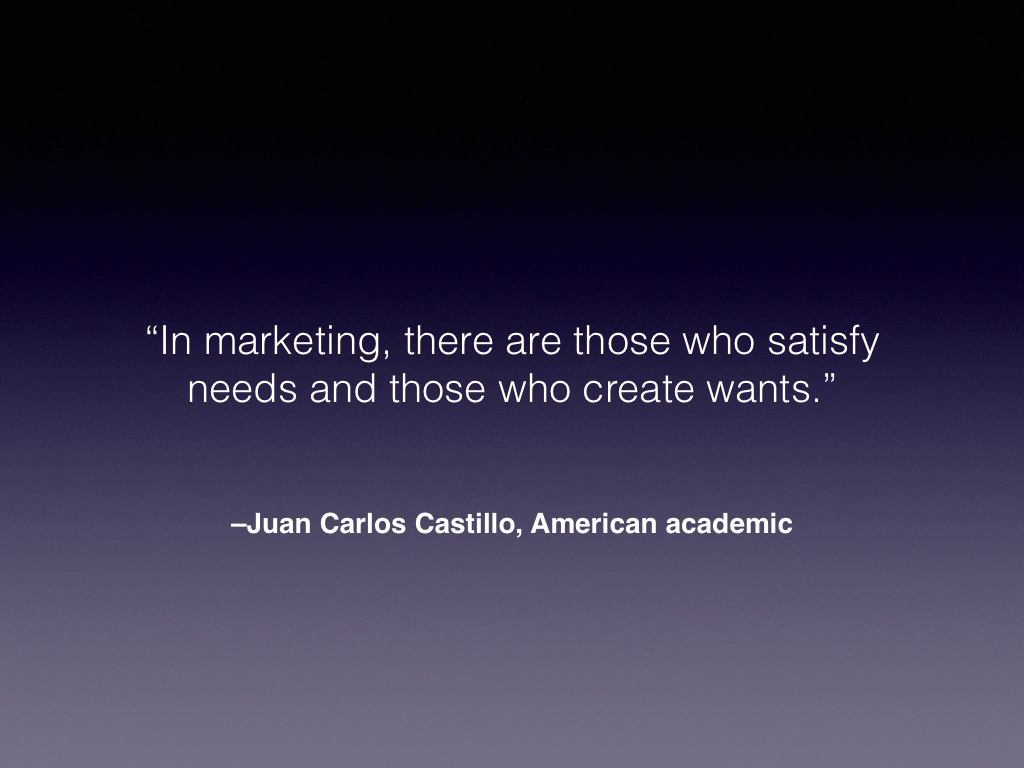
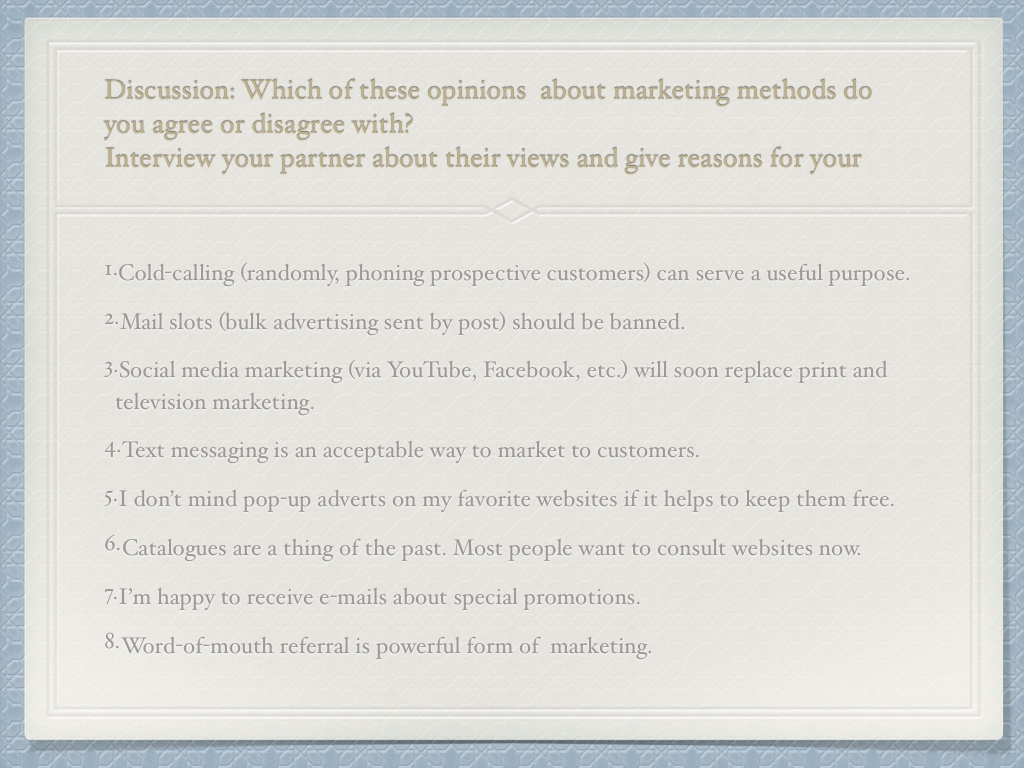
Opinions are a good way to start a lesson plan. This slide comes from my Marketing lesson plan. It can open a lot of discussion as well.
journal
Journals are good for reflections.
It is best to introduce it at the beginning of the term and you can reference their journal later if it seems applicable. I do not use it that as much as I should.
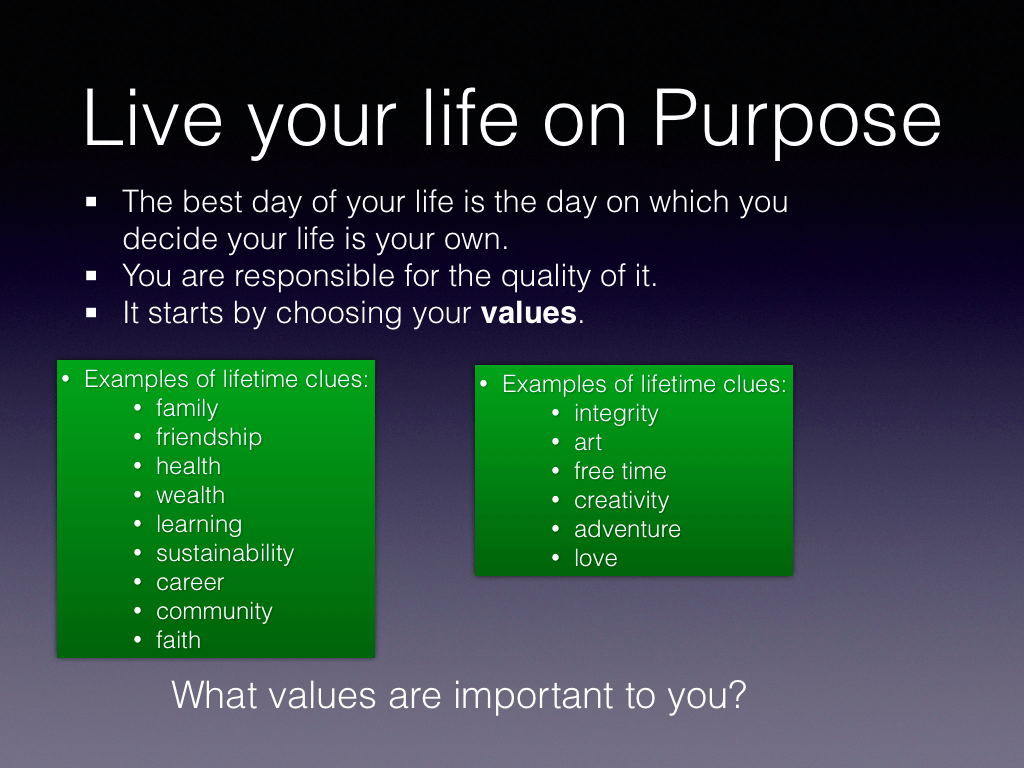
I tell learners to bring a notebook so they can write goals for themselves.
I start with one basic question. This would be considered a free practice where the learner will write whatever comes to mind from that question.
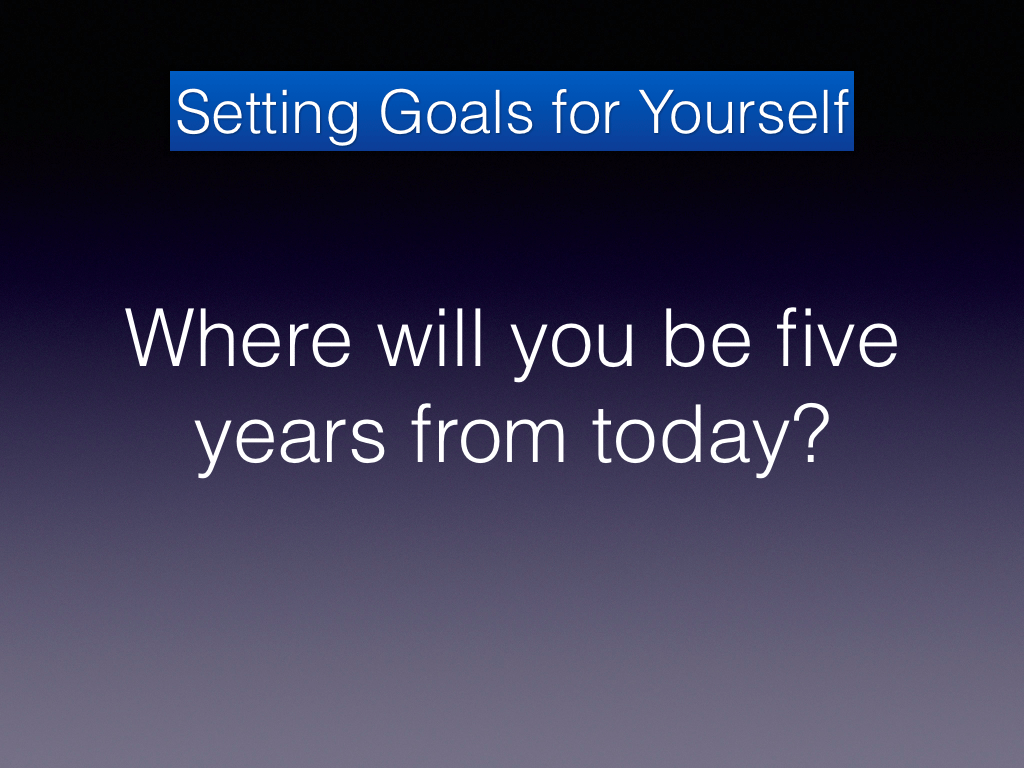
This slide could serve as one lesson plan. This can open up about what values are important to them which may not necessarily be about money or finance.
Journals can be very personal and private and I give learners the option to share or not.
This can also be used to in the activity type concept formation by prioritizing their own values.
K-W-L
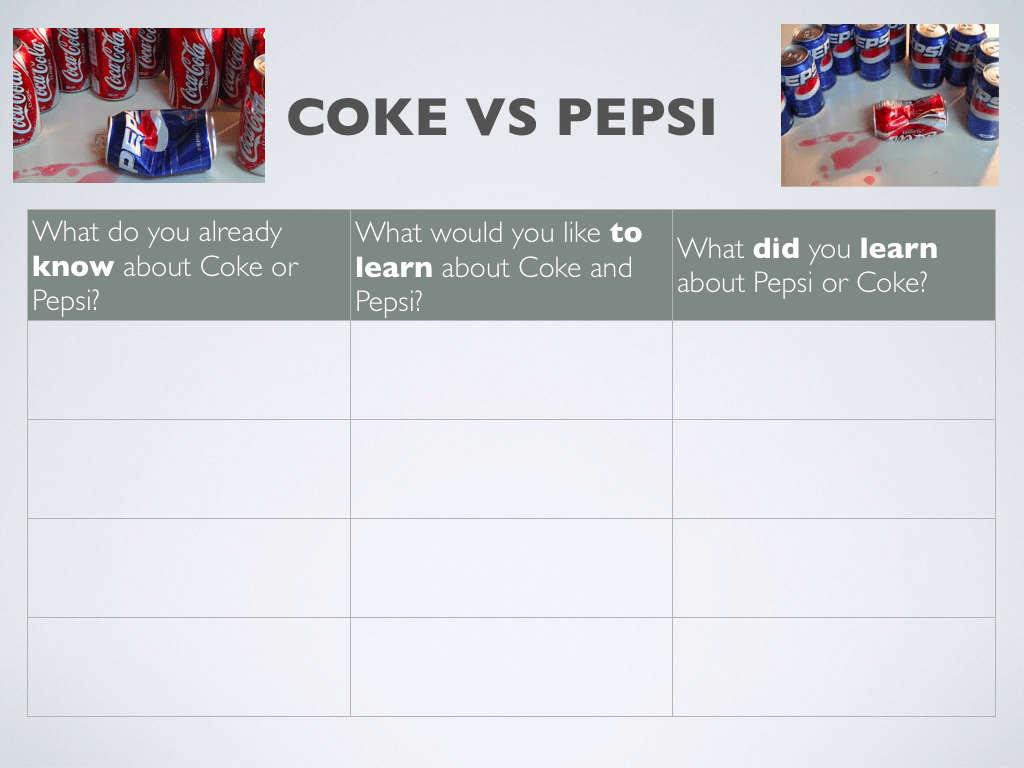
K-W-L was created by D.M. Ogle in 1986. It is a graphic organizer that charts what the students already know(K), want to learn(W), what was learned(L).
This is best used with movies/documentaries. You never want to blindly show a film without introducing the topic. Too many times are movies just shown and the learners do not consider it class time.
My favorite K-W-L lesson is Pepsi vs Coke. Everyone is familiar with the product and yet are still curious about what is the secret formula.
The documentary I show is: Pepsi vs Cola: The Marketing Battle of the Century
I created a slide for this lesson plan, but you can easily draw the chart on the board.
I usually reflect the projector on the whiteboard so I can write the learner’s answers in the boxes.
In the past, I have done pre-assessment questions where the students would predict the answers before watching the movie, but the K-W-L is less time consumption for the instructor’s preparation.
Although it is advised that the instructor should view the film beforehand, the K-W-L does not require it based on pre-existing knowledge, curiosity/interest, and gained knowledge from the students and omits specific questions the instructor would need to generate on his/her own.
discussion questions
Discussion questions are probably the most basic but they can get the learners activated the quickest.
I usually do not go beyond five questions.
The group decision I use for discussion questions can vary from open class discussion, in pairs, or larger groups.
Preferable, I usually will do open class discussion because the learners need a little more motivation.
It is important to write their responses on the board and compare their answers later from the lesson.
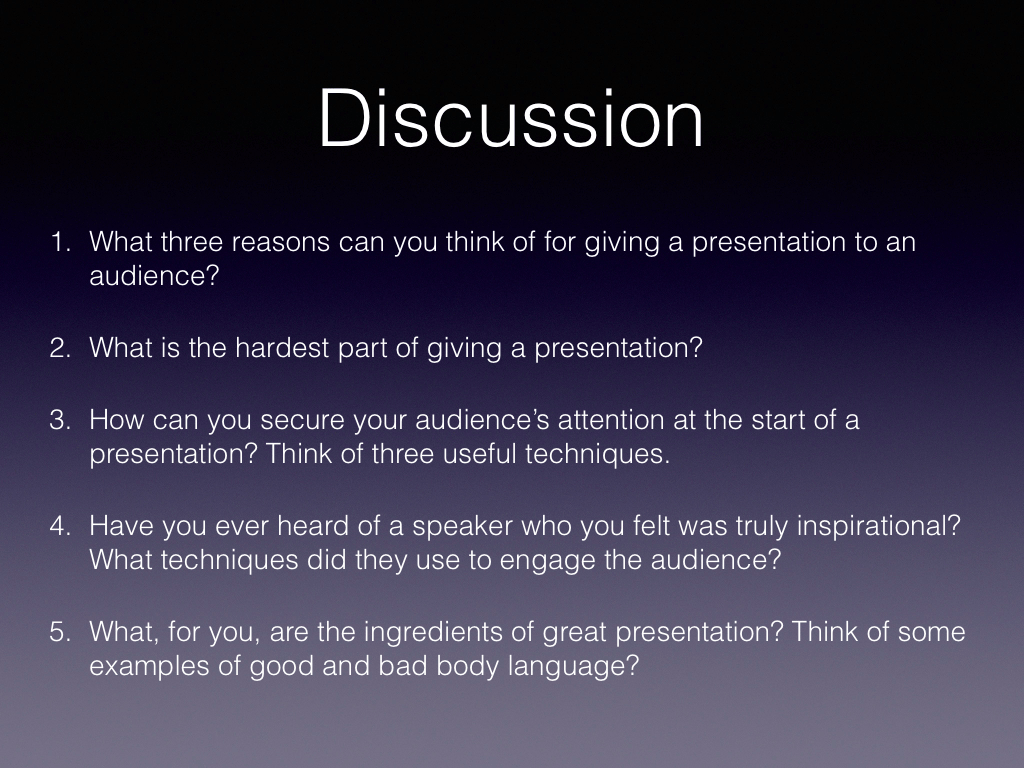
Discussion questions are the best way to gauge the learners’ background most directly.

Conclusion
As I mentioned before in my previous posts, the list is certainly not exhausted on how to activate learners. The goal for beginning a lesson is to activate that “on button” in their brain so they can acquire the knowledge in the next stage.
Hope to see you in the acquire stage!
 AAA Lesson Plan Template